A Heritage Almost Lost
For thousands of years, Chinese civilization was shaped by the belief that life should be guided by harmony between Heaven, Earth, and people.
This belief was not abstract. It impacted daily life from the family home to the imperial court. A child learned to honor his parents. A ruler was expected to govern with virtue. An artist sought not only beauty of form, but purity of heart.
This was the world of traditional Chinese culture. Its foundations were shaped by Buddhism, Taoism, and Confucianism. These taught that virtue and morality mattered, that good and evil had consequences, and that human life was connected to something higher.
Over many dynasties, this worldview found expression in China’s arts. A poem could reveal the state of a person’s soul. A painting could suggest the vastness of nature and the smallness of man. A dance could portray courage, grace, humor, or spiritual longing without a word spoken.
These traditional ideals gave meaning to the New Year, to ancestral customs, to sacred mountains and temple bells, to stories passed from one generation to the next. In those stories, heroes were tested, sages appeared in humble places, and ordinary people faced choices between selfishness and righteousness.
This is the cultural world Shen Yun has brought back to life. But why did it need to be revived?
A Civilization Interrupted
In 1949, the Chinese Communist Party (CCP) came to power after decades of war and upheaval. From the beginning, its goal was to not only govern China, but to remake the Chinese people.
Traditional culture stood in the way of that project.
The CCP sought to replace traditional ideals and loyalties to family and integrity with absolute devotion to the Party and its revolutionary ideology. Where traditional Chinese thought emphasized harmony between Heaven, Earth, and humanity, the CCP taught struggle.
“To struggle against Heaven is endless joy; to struggle against Earth is endless joy; to struggle against people is endless joy.”
— CCP Chairman Mao Zedong
Land reform and collectivization campaigns in the 1940s and ‘50s dismantled traditional agrarian society, and Mao’s Great Leap Forward in 1958 led to a catastrophic famine that killed as many as 40 million people.
Religious institutions came under state control. Monks and nuns were forced into secular life. Classical education gave way to political study. Schools and artists were made to serve political goals. Art that once explored moral character and spiritual meaning was only judged by whether it served the revolution.
The most violent assault on China’s ancient heritage came during the Cultural Revolution, from 1966-76. Mao called upon young people to rebel against tradition. Red Guards swept across the country under the campaign to destroy the “Four Olds”: old ideas, old culture, old customs, and old habits.

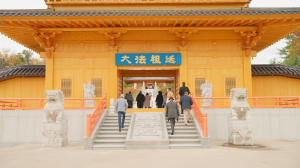
Temples were ransacked and burned to the ground. Statues of Buddhas, Taoist deities, and Confucius were smashed. Classical books and family records were burned. Ancestral halls were defaced. And the people who had once carried China’s learning and traditions, such as intellectuals and monastics, were persecuted, imprisoned, and, in many cases, murdered.
When a temple is destroyed, more than a building is lost: a place of worship, history, and spiritual meaning disappears with it. When books are burned, the ideas, values, and memory they carry go up in smoke as well. An entire generation was cut off from the past. This was the great rupture in Chinese civilization.
After the Cultural Revolution ended, some outward forms of traditional culture gradually returned. Some temples were repaired, some festivals reappeared, and some ancient symbols were displayed again. But under communist rule, these outward forms often remained separated from the spiritual beliefs and moral values that had once given them life—the essence was gone.
Shen Yun’s tagline “China before communism” refers to breathing life into the traditional culture that was almost completely destroyed, bringing a civilization back from the brink of extinction.
What It Means to ‘Revive a Culture’

Reviving a culture is different from preserving an artifact. A vase can be placed in a museum, but culture itself is lived. It requires movement and people who understand its inner meaning to carry it forward. This is Shen Yun’s mission.
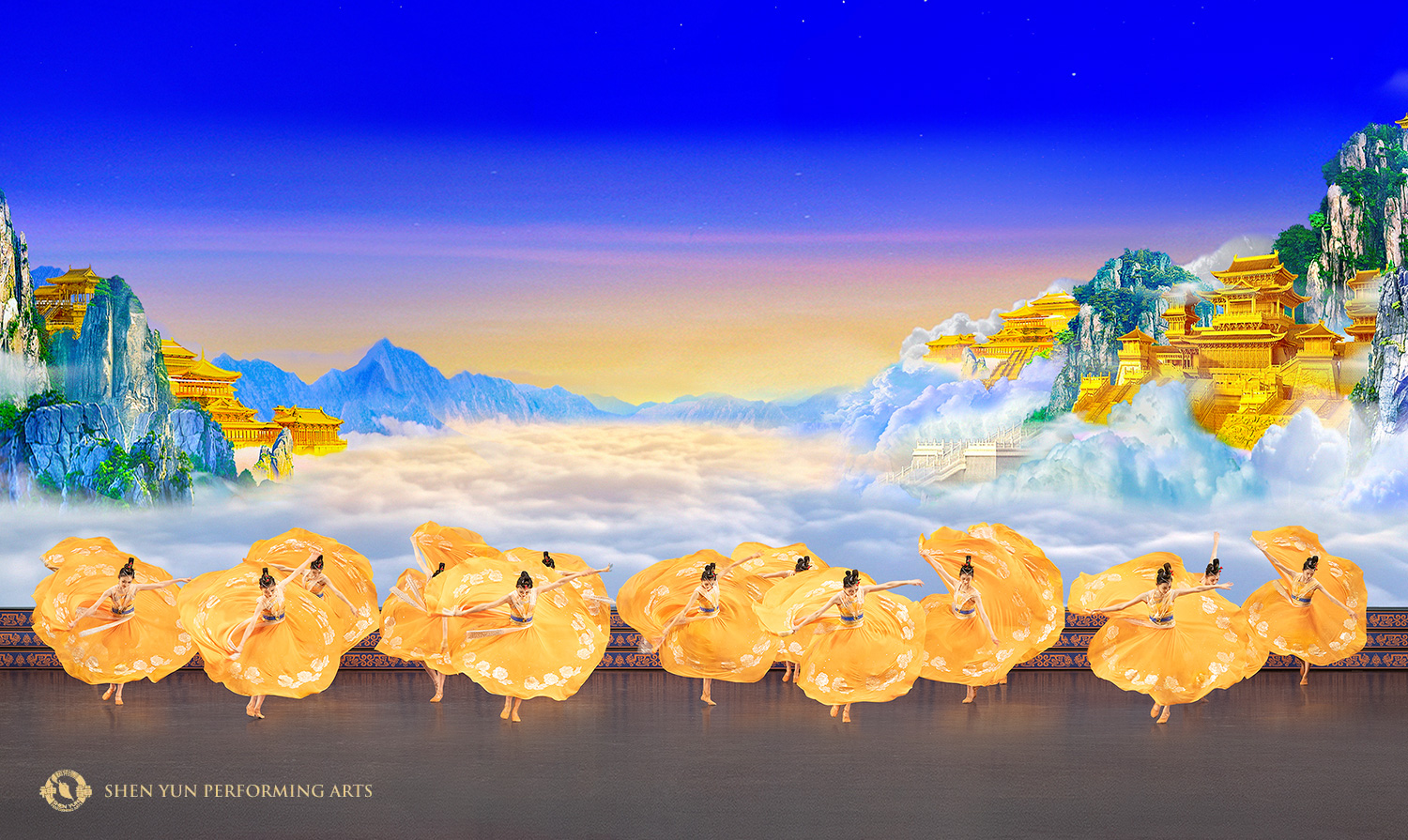
The company draws on traditional forms such as classical Chinese dance, music, and costumes. The outer beauty matters because it instantly transports the audience to the world of traditional China. A dancer’s movements, the sound of the erhu, the sweep of a long sleeve, or the image of a mountain temple surrounded in mist can evoke an entire cultural world.

But for Shen Yun, revival is not only a matter of historical accuracy or visual beauty. The artists seek to bring these forms to life through the values that shaped traditional Chinese culture itself.
In classical Chinese dance, technical skill is joined with inner bearing—that means the dancer has to embody and live the values she is portraying.
In storytelling, ancient legends become a way to reflect on courage, loyalty, compassion, and moral choice. In music and staging, beauty is meant not only to impress, but to uplift.
This is why Shen Yun’s work is both artistic and cultural. It does not treat tradition as something distant or frozen in the past. It allows audiences to experience it as something living—carried by artists who believe that excellence on stage begins with cultivation of the heart.
11. Říjen 2026